Edge AI Chip Market Trends 2026: Why It’s Not Just a “Hardware Story”
Author:sana
Released:December 4, 2025
The old model of running everything in big, far-away cloud data centers worked well when the focus was on training large models. But today's AI isn't just trained once and forgotten.
When people actually use AI features, every request has to travel back and forth to a remote server. That round-trip often adds 80 milliseconds or more, which feels slow for real-time use like robotics, games, or safety systems.
New studies show that even 5G networks can't fully make up for these delays when data still has to go to a central cloud. In contrast, processing right where the data is created can cut that delay down to under 10 milliseconds, a level needed for smooth interaction and fast decision-making in cars, phones, and machines.
What is Edge AI
Edge AI means running intelligent software directly on devices instead of sending data back and forth to big cloud servers. This local processing cuts down on slow network delays and keeps sensitive information where it was created.
When decisions and analysis happen right on the device, you don't have to wait for a round trip to a distant data center. That's why real-time tasks like camera tracking, speech processing, or machine alerts rely on on-device AI.
Why Edge AI Matters Today
Edge AI matters because the technology is already big and growing. In 2026, the global market for Edge AI hardware, software, and services is about $47.6 billion. This means many companies are building and deploying AI that runs directly on devices instead of relying only on remote servers.
Processing data where it is created brings clear practical benefits:
- Faster response: decisions can happen in milliseconds because there is no long trip to a cloud data center.
- Lower data traffic: only useful insights go back to central systems, reducing network load.
- Better privacy: sensitive raw data stays on the device and does not have to be sent elsewhere.
These benefits appear in real applications. Smartphones use built-in processors for features like real-time translation, photo enhancement, and voice recognition. In industry, edge controllers monitor equipment and raise alerts without a constant cloud connection.
Across sectors including consumer electronics, manufacturing, and automotive, running AI closer to where data is created cuts delays, reduces costs, and improves data control. Edge AI is no longer just a future idea, it is practical today, bringing speed, efficiency, and stronger control to everyday applications.
Specialized Hardware and Market Growth
Why General CPUs and GPUs Are Being Replaced
For years, general CPUs and GPUs handled the heavy lifting for machine learning. They worked well in data centers where power and space were plentiful. But for small devices like phones, cameras, and sensors, they are not ideal.
These parts use a lot of power and can overheat in tight spaces. That is why chip designers are moving toward purpose-built silicon such as Neural Processing Units (NPUs) and Application-Specific Integrated Circuits (ASICs).
These chips are made to run neural network workloads efficiently and stay cool even in compact devices. Specialized hardware focuses on performance per watt rather than raw clock speed, so devices can do complex tasks while using less energy.
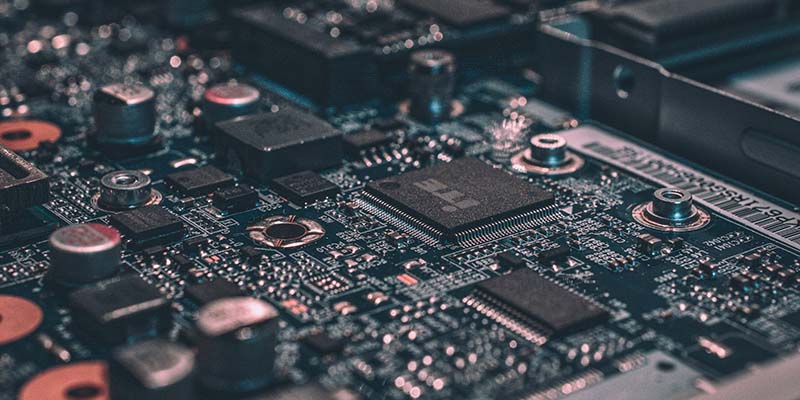
NPUs and ASICs excel because they can run many operations in parallel, which is essential for tasks like vision recognition, speech processing, and predictive analytics. Many modern System-on-Chip (SoC) designs now reserve significant die area for an NPU alongside the CPU. That physical space reflects how critical local AI processing has become for everyday devices.
Market Growth and Investment Trends
Recent forecasts show rapid expansion in edge AI silicon markets. The global edge AI chips market is expected to grow from about $8.3 billion in 2025 to roughly $36.1 billion by 2034.
Another projection, focusing on integrated circuits for edge devices, estimates growth from about $4.0 billion in 2026 to $10.5 billion by 2034, also at roughly 18 % CAGR.
These figures reflect more than hype. They show companies are actively designing and shipping silicon that can handle AI tasks on the device itself.
Device makers are backing this trend with dollars. Chip teams are optimizing hardware support for techniques like quantization to shrink model size and energy use without losing accuracy. At the same time, analysts note broader AI chip markets, including both edge and data-center silicon, could be worth hundreds of billions by the early 2030s.
Everyday Examples and What This Means for Use
This shift is already visible in the products around us. Smartphones today often include dedicated NPUs that help with photography, voice assistants, and on-device language translation.
Wearables use low-power AI engines to interpret health data without sending everything to the cloud. In automotive systems, local AI chips help with driver safety features by processing camera and radar data instantly.
In industrial settings, edge silicon enables predictive maintenance and real-time analytics, even when network connections are intermittent. Smart infrastructure such as traffic cameras or environmental sensors use edge AI to filter and send only meaningful summaries rather than raw data.
The Financial Case: Latency, Economics, and Security
Latency Limits of Cloud-Only Architectures
When data has to travel to a distant cloud server and back, physics imposes a hard limit on responsiveness. For systems that must act in milliseconds, such as autonomous vehicles or robotic arms on a factory floor, waiting for a cloud response can be too slow.
Studies show that edge processing can cut latency from hundreds of milliseconds down to the single-digit range, making real-time responses practical for safety-critical work. Local processing keeps decision loops tight and predictable, independent of network congestion or signal quality.
Latency isn't just about speed. In augmented reality and machine vision use cases, any delay between sensing and action can break the experience or even cause errors. That is why many engineers now design systems to do the first layer of logic right where the data is created, not halfway across the world.
The Cost Picture: Cloud vs Local
Cloud computing bills on usage. Every byte sent, stored, and processed adds to monthly costs. When millions of IoT sensors generate terabytes of data daily, that bill rises fast. Sending raw sensor streams to remote servers becomes expensive in bandwidth and storage. Edge computing solves part of that by filtering and processing data locally and only sending summaries or alerts.
Research shows that hybrid edge-cloud setups can cut annual operational costs dramatically, sometimes reducing energy and bandwidth expenses by 65 % or more compared to cloud-only models.
Upfront edge hardware costs tend to be higher than standard chips, but once deployed local processors handle inference with almost no ongoing transmission charges.
For high-volume workloads, the drop in per-unit operational cost can make edge architectures pay back quickly. In some industrial cases, companies have reported bandwidth cost reductions of over 80 %, shifting the balance sheet from recurring cloud fees to predictable hardware investment.
Security and Data Control
Sending sensitive data like biometrics or medical records to a third-party server broadens the potential attack surface. Each transfer point and remote storage location introduces risk.
Many regulators, including GDPR in Europe, require organizations to know exactly where personal data lives and how it moves. Processing sensitive information locally simplifies compliance because raw data never leaves the device or controlled premises.
Keeping information close also limits exposure in the event of a cloud breach. Facial geometry, voice recordings, and internal manufacturing signals stay on devices or local gateways, not scattered across global data centers. For industries where trust and privacy are non-negotiable, this structural separation builds a foundation for use cases that simply cannot tolerate wide-area exposure.

Real-World Applications: From Factories to Freeways
Smarter Security and Manufacturing
Modern security systems no longer just send hours of video to a central server and hope someone reviews it later.
Cameras with edge AI chips can process video right inside the device. These systems distinguish real threats from empty scenes and only flag important events almost instantly. That cuts network and storage costs dramatically while keeping basic surveillance active even if the internet goes down. Locally applied privacy masking can blur faces on the device itself to protect identities before any footage is saved or shared.
On factory floors, edge AI is widely used for predictive maintenance and quality checks. Sensors attached to motors and machinery analyze vibration, temperature, and other signals locally so that tiny problems are spotted before they become big breakdowns.
That means fewer costly stoppages and less need to stream all raw data to a remote server. Many manufacturers report that local processing reduces unplanned downtime by around a quarter while improving overall efficiency.
Healthcare Wearables and Patient Monitoring
Wearable devices are now more than simple step counters. Modern health trackers and medical wearables can read complex signals such as heart rhythms or glucose patterns and interpret them on the device in real time.
This local decision-making keeps sensitive health data on the device, which helps with privacy regulations like HIPAA. It also ensures critical alerts, like fall detection or arrhythmia warnings, happen without needing an internet connection.
Emergency medical devices such as automated insulin pumps must work reliably even in areas with poor cellular coverage. That reliability depends on processing decisions right where the data is created.
Automotive and Traffic Systems
The automotive industry illustrates just how essential edge processing has become. An autonomous car traveling at freeway speed cannot afford the delay of sending sensor data like lidar, radar, and camera feeds to a cloud server for analysis.
Edge AI lets vehicles interpret this data locally so they can identify pedestrians, obstacles, and lane markings in real time. These split-second decisions are key to safety features such as collision avoidance and adaptive cruise control. On top of that, localized processing is now part of safety certification requirements for advanced driver assistance systems.
In broader transportation systems, city traffic cameras and smart intersections use edge analysis to monitor flow and adjust signals without consulting remote services. These practical deployments show how edge AI moves decision points out of distant centers and into the environment where data is generated.
Choosing the Right Hardware for Edge AI
Moving AI workloads to local devices means rethinking the idea that more processing power is always better. Instead of chasing raw speed, focus on efficiency - how much work a chip can do per watt of energy. Using the right hardware prevents wasted power and avoids overheating issues.
Overpowered chips can sit idle while underpowered ones create slowdowns that cancel out any speed gains. Specialized Neural Processing Units, designed for AI tasks, usually handle these workloads better than general-purpose CPUs. Matching the chip to the model size is key for smooth performance and longer battery life.
Testing early matters. Run your neural networks on the target chips during the design phase. This reveals potential bottlenecks before production, so engineers can pick components that hit the right balance between speed and energy use.
Planning for Local AI
Moving from cloud servers to local devices is becoming practical, not just a trend. With tighter privacy rules and rising bandwidth costs, sending all data to the cloud can be slow and expensive.
Start by reviewing your current cloud use. Look for tasks where latency causes delays or data transfer drives up costs. Those areas are prime candidates for running AI locally. Smart placement of AI isn't about replacing the cloud completely. It's about handling tasks closer to the user, saving time, and cutting unnecessary resource use.
Don't Miss

Human-AI Collaboration: Why Creativity Still Matters in the AI Era

The Rise Of AI Personal Assistants: What They Can Do Now

10 Free AI Tools That Can Replace Photoshop for Quick Image Editing

What Is AI Bias And How It Shapes Your Daily Decisions
Edge AI Chip Market Trends 2026: Why It’s Not Just a “Hardware Story”